
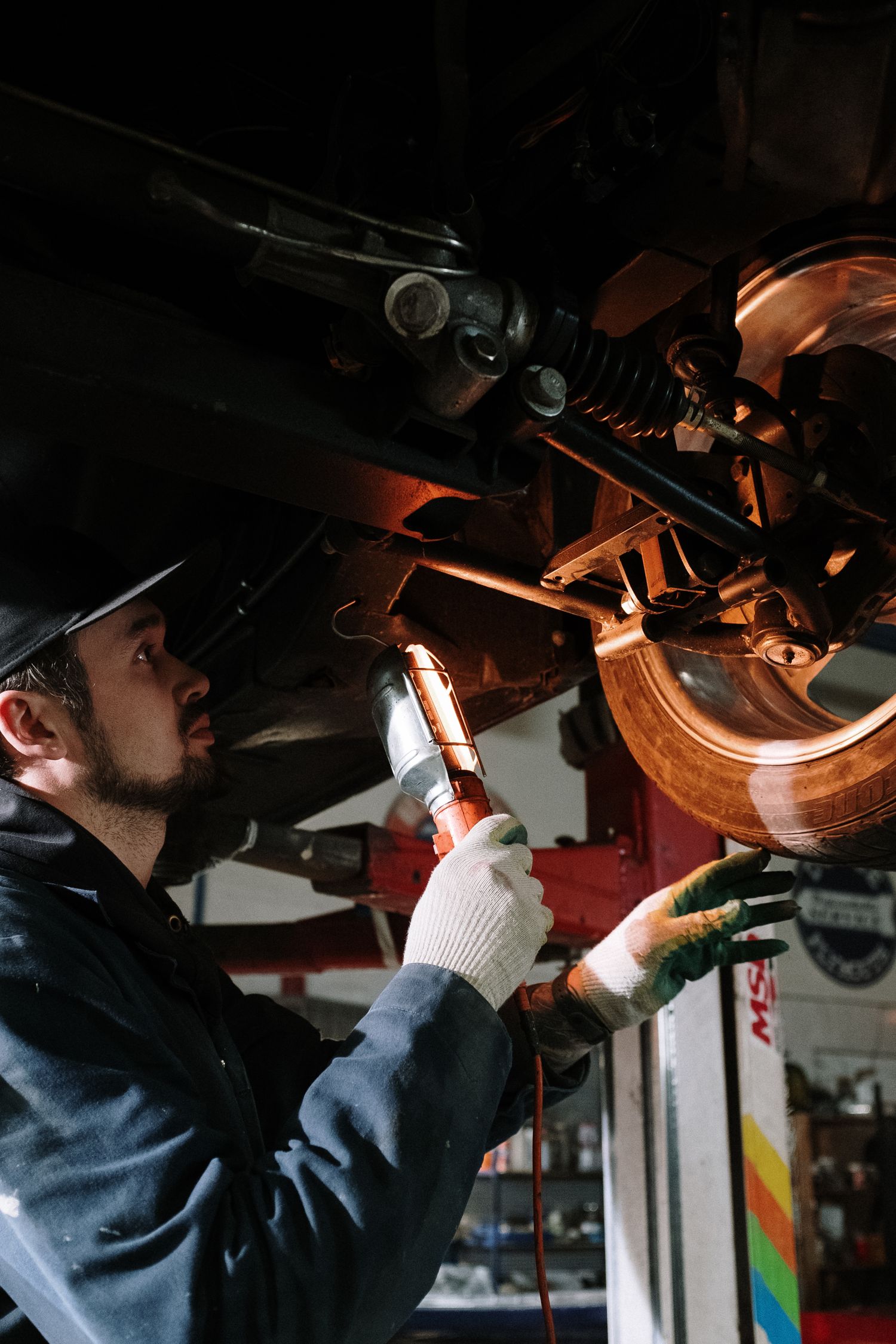
Here's a number that might make your wallet wince: the average American driver spends around $1,400 to $1,500 per year on vehicle maintenance and repairs. With shop labor rates now sitting between $170 and $240 an hour across most of the country — and even higher at dealerships in the D.C. metro area — it's no surprise that more and more car owners are reaching for a wrench instead of a phone.
The good news? You don't need to be a certified mechanic to handle a surprising amount of your car's routine maintenance. If you can change a flat tire or follow along with a YouTube tutorial, you already have the foundational skills. With a modest investment in basic tools and a willingness to get your hands a little dirty, you can take care of roughly 80% of the maintenance tasks that would otherwise send you to the shop. Here are seven of the best ones to start with.
1. Check and Maintain Your Tire Pressure
This is the single easiest maintenance task you can do, and it's one of the most important for safety. The National Highway Traffic Safety Administration estimates that nearly 11,000 tire-related motor vehicle crashes happen annually in the United States, and many of them could be prevented with basic tire upkeep.
Even if your car has a tire pressure monitoring system (TPMS), those sensors only warn you when pressure drops significantly — they won't catch a slow decline. The fix is simple: buy a quality tire pressure gauge (they cost about $10), check your pressure once a month in the morning before driving, and inflate to the manufacturer's recommended PSI listed on the driver's door jamb sticker. Properly inflated tires also improve your fuel efficiency, which is an added bonus every time you fill up.
While you're at it, take a minute to inspect your tread. Look for bald spots, uneven wear patterns, or any nails and screws lodged in the rubber. If you spot uneven wear, it's often a sign that you need an alignment.
2. Check Your Engine Oil
Oil is your engine's lifeblood, and checking it is a two-minute job. Park on level ground, wait at least five minutes after turning off the engine, then pull the dipstick, wipe it clean, reinsert it fully, and pull it out again for a proper reading. The oil level should fall between the MIN and MAX marks. If it's low, top it off with the type and weight specified in your owner's manual.
Beyond the level, pay attention to the oil's color and consistency. Fresh oil is amber and translucent. If yours looks dark, gritty, or has a burnt smell, it's time for a full oil change — which is itself a very doable DIY task. A basic oil change requires just a socket wrench, an oil drain pan, a new filter, and the correct oil for your vehicle. Your owner's manual will tell you the recommended change interval, though a common rule of thumb for conventional oil is every 5,000 to 7,500 miles.
3. Replace Your Engine Air Filter
Think of your engine air filter as your car's lungs. When it's clogged with dust and debris, your engine has to work harder to breathe, which hurts fuel economy and can reduce performance over time. Replacing it is one of the simplest jobs in automotive maintenance — most filters can be swapped out in under five minutes with no tools at all.
Open your hood, locate the air filter housing (it's usually a large rectangular or cylindrical box near the front of the engine bay), unclip the housing, pull out the old filter, and drop the new one in. A replacement filter costs anywhere from $10 to $25 at any auto parts store. Most manufacturers recommend replacing the engine air filter every 12,000 to 15,000 miles, or once a year, whichever comes first.
4. Replace Your Cabin Air Filter
This one is even easier than the engine air filter, and most people don't even know their car has one. The cabin air filter cleans the air that comes through your HVAC system — your heat, air conditioning, and defrost. When it gets dirty, you'll notice reduced airflow, musty smells, and foggier windows.
On most vehicles, the cabin filter is located behind the glove box. Open the glovebox, squeeze the side tabs to release it, and the filter housing is right there. Pop the old one out, slide the new one in, and you're done. Replacement filters cost between $10 and $20, and the whole job takes about three minutes. Swap it once a year or every 15,000 miles and your cabin will smell noticeably fresher.
5. Top Off Your Fluids
Beyond engine oil, your car runs on several other fluids that need periodic attention: coolant, brake fluid, power steering fluid, transmission fluid, and windshield washer fluid. Checking most of them takes less than a minute each.
Coolant should be checked with the engine completely cold — never open a hot radiator cap, as pressurized coolant can spray out and cause serious burns. The coolant level should be between the MIN and MAX marks on the expansion tank. Brake fluid and power steering fluid can be checked with the engine off by looking at their respective reservoirs under the hood. Windshield washer fluid is the simplest of all — just top it up to the fill line with ready-mixed washer fluid that has some freeze protection.
If any of these fluid levels are consistently dropping, that's a signal to have a professional take a look, since it may indicate a leak somewhere in the system.
6. Inspect and Clean Your Battery
A dead battery is one of the most common reasons for roadside assistance calls, and a lot of battery failures are preventable with basic maintenance. Pop your hood and inspect the terminals. If you see white, green, or blue crusty buildup on the connectors, that's corrosion, and it can prevent your battery from delivering a full charge.
You can clean battery terminals with a mixture of baking soda and water, a wire brush, and a rag. Make sure the leads are tight and secure after cleaning. If you want to go a step further, inexpensive battery testers are available that measure your battery's remaining capacity and voltage during startup. Most car batteries last three to five years, so if yours is getting up there in age, testing it periodically is a smart move.
7. Replace Your Wiper Blades
This one's quick, cheap, and immediately noticeable. If your wipers are leaving streaks, skipping, or making squeaking sounds, it's time for new blades. Worn wipers are more than just annoying — they're a safety hazard in the rain, especially on Virginia and Maryland highways where sudden downpours are a regular occurrence.
Most wiper blades simply snap on and off with a release tab. Plan to swap your wipers once a year, ideally before the spring rain season kicks in. A set of quality blades costs between $15 and $40 and is one of the highest-impact, lowest-effort upgrades you can make.
The Starter Toolkit You Actually Need
You don't need a full garage setup to start doing your own maintenance. Here's a realistic starter kit: a basic socket wrench set, a tire pressure gauge, a jack and jack stands, an oil drain pan, a flashlight, a funnel, and a pair of mechanic's gloves. You can put this together for somewhere between $150 and $250, and you'll make that investment back after your first couple of oil changes.
Know When to Call a Pro
As much as we love DIY, it's equally important to know your limits. If your check engine light comes on, that's a signal to get your car to a mechanic promptly. Similarly, anything involving your car's electrical system, fuel system, or major drivetrain components is generally best left to professionals until you've built up more experience.
The sweet spot is using DIY maintenance for the routine stuff — the oil, the filters, the fluids, the wipers — and building a relationship with a trusted local mechanic for the bigger jobs.
Your Car Is a Machine — Get to Know It
There's something deeply satisfying about popping your hood and actually understanding what you're looking at. Every time you check your own oil, swap your own filter, or clean your own battery terminals, you're building a relationship with your vehicle that makes you a more informed, more confident, and ultimately safer driver. And that same hands-on mindset is exactly what makes learning to drive a manual transmission so rewarding — it's about engagement, control, and knowing your machine inside and out.
Sources
- Car Nut Chronicles, "DIY Car Maintenance Basics for 2026" (December 2025)
- NPR Life Kit, "The 4 DIY Car Maintenance Tips Every Vehicle Owner Should Know"
- Haynes, "The Ultimate Beginner's Guide to DIY Vehicle Maintenance" (November 2025)
- Mobile Car Care, "DIY Car Maintenance at Home: 15 Easy Tasks for 2026" (March 2026)
- Family Handyman, "14 Car Repair and Maintenance Tasks You Can DIY" (February 2026)